Shame Won't Save the Planet: How Sustainability Anxiety Is Quietly Sabotaging Your Wardrobe

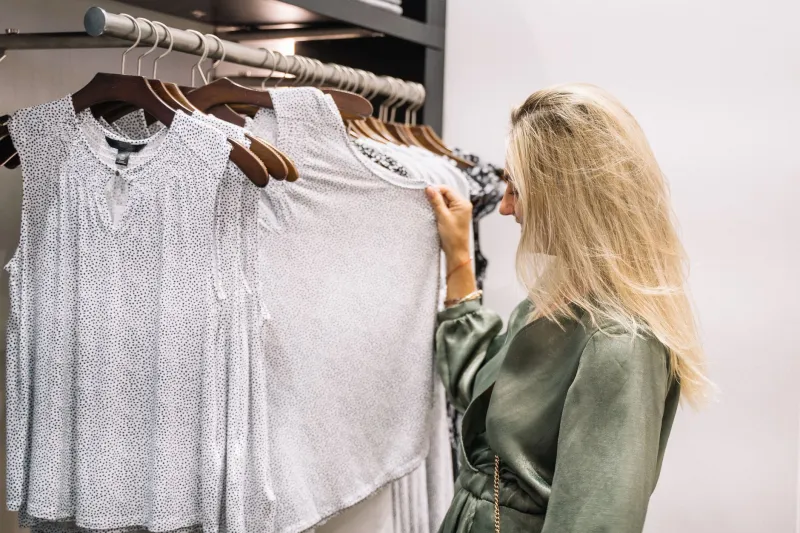
Let's paint a familiar picture. You need a new pair of jeans. Simple enough, right? Except you spend three weeks researching fiber content, manufacturing locations, certifications, and founder interviews. You read a Reddit thread that convinces you the brand you liked is actually problematic. You close seventeen browser tabs. You buy nothing. Then one Tuesday evening, exhausted and overwhelmed, you add a $35 pair of jeans from a fast fashion site to your cart because your brain just gives up.
Sound familiar? That's not a personal failure. That's the ethical fashion guilt trap — and it's catching a lot of us.
When Good Intentions Create Bad Outcomes
The sustainable fashion world is genuinely full of complicated information. Certifications overlap and sometimes contradict each other. Brands that seemed trustworthy turn out to have murky supply chains. The "right" fiber choice in one context is a disaster in another. And the internet is absolutely packed with people ready to tell you that whatever you just bought was the wrong call.
All of that noise creates something researchers call decision fatigue — the mental exhaustion that comes from processing too many choices and too much conflicting information. And when your brain hits its limit, it doesn't default to your most thoughtful, values-aligned choice. It defaults to whatever is easiest, fastest, and most immediately satisfying.
This is why guilt-driven shopping is such a trap. The harder you try to be perfect, the more likely you are to eventually crash into a purchase that doesn't reflect your values at all. You're not being inconsistent because you don't care. You're being inconsistent because you've been running on anxiety fumes, and those run out.
The Perfectionism Problem
There's a specific flavor of ethical fashion anxiety that shows up as perfectionism — the belief that unless every single item in your closet clears an impossibly high bar, you've failed at sustainable fashion entirely. You wear a piece you love but feel vaguely guilty every time you reach for it because you bought it before you knew better, or because the brand has one problematic product line, or because you haven't worn it exactly enough times to justify its carbon footprint.
This kind of thinking has a real cost. It leads people to donate or discard perfectly wearable clothing in an attempt to "start fresh" with a cleaner wardrobe — which is, ironically, one of the least sustainable things you can do. The most ethical item in your closet is almost always the one that already exists. Wearing what you own, even if it came from a less-than-perfect source, keeps it out of the waste stream.
Perfectionism also keeps people from starting at all. If the barrier to entry is having a completely vetted, fully certified, 100% cruelty-free closet before you can call yourself an ethical shopper, most people will never begin. And a world where more people make more imperfect progress is genuinely better than a world where a handful of people achieve closet perfection while everyone else opts out.
How Shame Actually Affects Your Purchasing Behavior
Shame is a weird motivator. In the short term, it can push people toward action — you feel bad, so you make a change. But research consistently shows that shame, as opposed to guilt, tends to be demotivating over time. The distinction matters: guilt says "I did something that conflicts with my values." Shame says "I am someone who fails at my values." One is actionable. The other just makes you feel like giving up.
When ethical fashion content leans heavily on shame — and a lot of it does — it can actually accelerate burnout. You start to associate sustainable shopping with stress, judgment, and failure rather than with the genuine excitement of finding something you love that also aligns with what you care about. Eventually, the whole project starts to feel like homework you'll never finish, and you disengage.
That disengagement is a loss, not just for you but for the broader movement. Every person who burns out on ethical fashion and returns to shopping on autopilot is a missed opportunity for the kind of long-term, sustained change that actually moves markets.
What Confidence-Based Shopping Actually Looks Like
The alternative to shame-based shopping isn't ignoring your values — it's building enough genuine knowledge and self-trust that you can make decisions without spiraling. Here's what that can look like in practice.
Pick your priorities and own them. You don't have to optimize for everything at once. Maybe your non-negotiable is cruelty-free beauty and animal-derived materials, and you're less focused on carbon footprint for now. That's a legitimate, meaningful place to start. Trying to track every possible impact metric simultaneously is a recipe for paralysis.
Make peace with the stuff you already own. That leather bag from six years ago, the cotton sweater from a brand you've since moved away from — these items exist. Wearing them out fully is the right call. You're not endorsing the original purchase by continuing to use what you already have.
Give yourself a decision framework, not a purity test. Instead of asking "Is this purchase ethically perfect?" ask "Is this better than what I'd otherwise buy?" That's a question you can actually answer, and it moves you forward rather than locking you in place.
Embrace good enough as a genuine win. A brand that's cruelty-free but not yet fully transparent about labor practices is still better than a brand that's neither. Progress counts. You're not betraying your values by acknowledging that.
Limit your research time deliberately. Give yourself a set amount of time to vet a brand or product — say, 20 minutes — and then make a call based on what you know. Endless research rarely turns up perfect answers; it mostly just delays decisions and increases anxiety.
You're Not the Problem
Here's the thing that gets lost in a lot of ethical fashion discourse: the burden of fixing a broken industry shouldn't fall entirely on individual shoppers making individual choices. Systems-level change — policy, regulation, corporate accountability — matters enormously, and no amount of personal guilt will substitute for it.
That doesn't mean your choices don't matter. They do. But you are one person navigating a genuinely complicated landscape with imperfect information and real budget constraints. Approaching that situation with some self-compassion isn't a cop-out. It's actually what keeps you in the game long enough to make a sustained difference.
Ethical fashion, at its best, should feel like an expression of something you care about — not a test you're constantly failing. When you shop from a place of confidence rather than fear, you make better decisions, you stay more engaged, and you actually enjoy the process. And enjoying it matters, because this is a long game.
So the next time you feel the guilt spiral starting to spin up, take a breath. You don't have to be perfect. You just have to keep going.