The Resale Loophole: Can You Shop Secondhand From a Brand You'd Never Buy New?
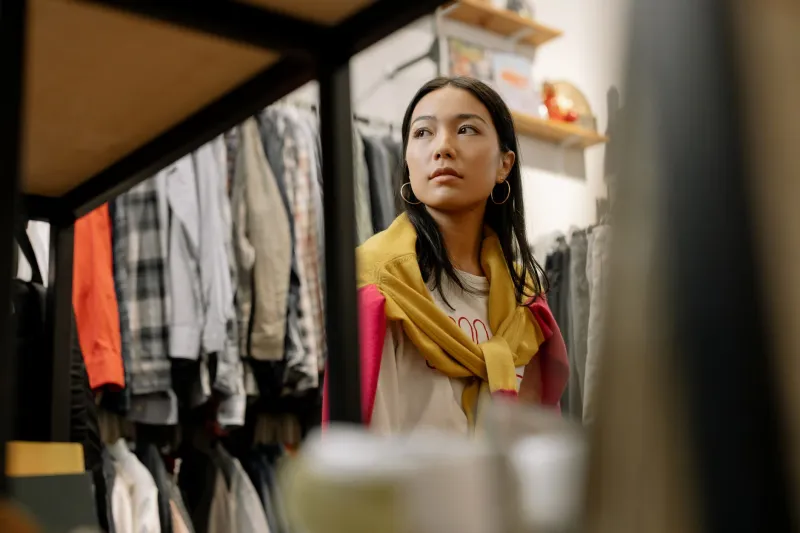
Let's say you're scrolling Depop on a Tuesday night and you find the perfect blazer. Great construction, your size, a price that doesn't make you wince. And then you notice the label. It's a brand you know — one with a documented history of wage theft in its overseas factories, or a parent company that funds lobbying against environmental protections, or a supply chain that's been flagged by labor rights organizations more than once.
Do you buy it?
This is one of those questions that sounds simple until you actually sit with it. And if you've been in the ethical fashion world for any amount of time, you've probably already wrestled with some version of it. The resale market has exploded — platforms like ThredUp, Poshmark, The RealReal, and Depop have made secondhand shopping genuinely mainstream — and that means the odds of encountering a great piece from a problematic brand are higher than ever.
So let's actually talk about it.
Why the "No New Money" Argument Holds Up (Mostly)
The most common defense of buying secondhand from a brand you'd otherwise boycott goes something like this: I'm not giving them any money. The item already exists. Buying it used keeps it out of a landfill and doesn't fund another production run.
And honestly? That argument is pretty solid. From a purely economic standpoint, purchasing a pre-owned item does not directly pad the revenue of the original manufacturer. You're transacting with an individual seller or a resale platform, not the brand itself. The item was already made. The harm — whatever form it took in the supply chain — already happened.
This is why so many ethical fashion advocates draw a hard line at new versus used. Buying new from a fast fashion giant funds the next collection. Buying used from that same brand's archive doesn't.
Where It Gets Complicated
But here's where the clean logic starts to fray a little.
First, there's the question of brand normalization. When a label's pieces circulate widely on resale platforms — when they show up in haul videos, get featured on style accounts, appear in editorial roundups — that brand stays culturally relevant. Visibility has value. Even secondhand exposure keeps a brand in the conversation, and that matters more than it might seem.
Second, some resale platforms have formal partnerships with the very brands that are problematic. A handful of major fast fashion companies have launched their own resale arms, or partnered with platforms like ThredUp to run branded resale programs. In those cases, the company is getting something from the secondhand transaction — data, brand goodwill, a PR narrative about circularity that obscures the fact that they're still producing millions of new garments every season. Buying through those specific channels is meaningfully different from buying from a stranger on Poshmark.
Third — and this one's more philosophical — there's the question of what we're normalizing in ourselves. If you've committed to not buying from a particular brand because of how they treat workers or the environment, does purchasing their product secondhand chip away at that commitment over time? Maybe. Maybe not. That's genuinely personal.
A Framework That Doesn't Require a Philosophy Degree
Okay, so how do you actually make a decision when you're staring at that blazer? Here's a practical way to think through it:
1. Where is the transaction happening? Is this a peer-to-peer sale on Poshmark or Depop? Or is it through a brand-run resale program? If it's the former, your money is going to a person, not a corporation. If it's the latter, reconsider.
2. How bad is the brand's track record, and in what way? There's a spectrum here. A brand that's been criticized for vague greenwashing language is different from one with verified, documented labor abuses or environmental violations. Your threshold for engagement — even secondhand — might reasonably be higher for the latter.
3. Are you filling a genuine need or rationalizing a want? This isn't about guilt. It's just worth asking. If you genuinely need a blazer and this is the best cruelty-free option available to you right now, that's one thing. If you're talking yourself into it because it's cute and convenient, that's another. Both are human. But knowing which one it is helps.
4. What's the alternative? Could you find something similar from a brand you actually feel good about, even if it costs a little more or takes more effort to find? Sometimes yes. Sometimes no. That answer matters.
The Guilt Spiral Isn't the Point
Here's what we're not trying to do: make you feel terrible about a secondhand purchase you made three years ago, or convince you that ethical fashion is only for people who can afford to be infinitely selective. That's not cruelty-free living — that's just a different kind of cruelty, aimed at yourself.
The secondhand market is genuinely one of the most powerful tools we have for reducing fashion's environmental footprint. Keeping clothing in circulation longer, reducing demand for new production, and shifting cultural norms around ownership and value — all of that is real and meaningful. The fact that some of those circulating garments have complicated origin stories doesn't erase that.
What the framework above is really asking you to do is stay conscious — not perfect. There's a difference between thoughtful engagement with a gray area and reflexive consumption that uses ethical-sounding language as cover.
The Bigger Picture
The inconvenient truth is that almost every piece of clothing that exists was made somewhere in a supply chain that had at least one problem. Vintage, resale, and secondhand shopping don't fully resolve that — they just change the terms of your relationship with it.
What you can control is whether your dollars, your attention, and your cultural participation are actively feeding systems that cause harm. Buying a ten-year-old jacket from a bad brand on Depop? Probably fine. Buying it through that brand's own resale portal while they market it as proof of their sustainability commitment? Worth a second thought.
The goal was never moral purity. It was — and still is — making choices that reflect what you actually care about, as often as you reasonably can. That's it. That's the whole thing.
And for what it's worth: the fact that you're asking the question at all puts you several steps ahead of most people. That counts for something.