Good Enough Is Actually Good: Breaking Up With Ethical Fashion Perfectionism
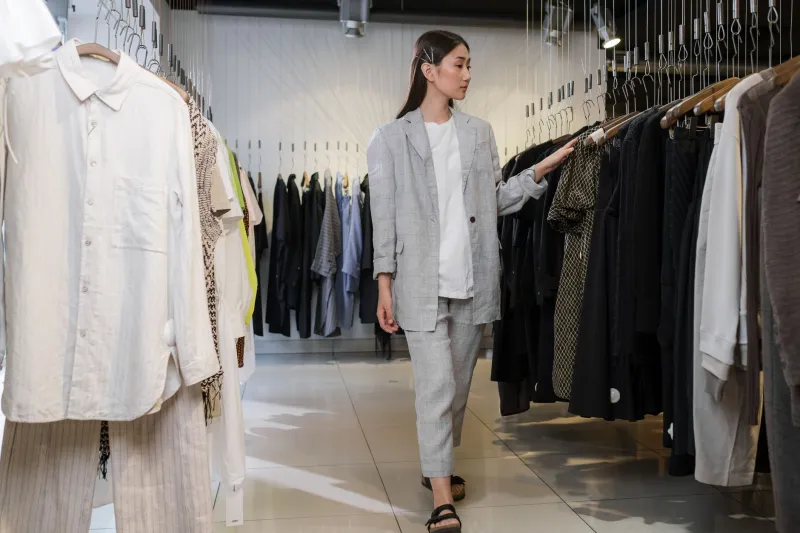
There's a specific kind of spiral that happens when you've been in the ethical fashion world long enough. You find a brand that looks promising — certified cruelty-free, uses organic cotton, woman-owned, ships in recycled packaging. You're excited. You add something to your cart. And then you start digging.
Maybe their parent company has a complicated history. Maybe they're certified by one organization but not another. Maybe a Reddit thread from 2021 raises questions about their factory conditions that the brand never fully addressed publicly. Maybe the fabric is sustainable but the dye process isn't discussed anywhere on their site.
So you close the tab. You buy nothing. And somehow, you still feel guilty.
Welcome to ethical fashion perfectionism — the exhausting, invisible trap that catches the people who care the most.
The Moving Goalpost Problem
Here's the thing nobody warns you about when you start shopping more consciously: the more you learn, the harder it gets. That's not a bug in the system. It's actually a sign you're paying attention. But it creates a moving goalpost problem where every new piece of information raises the bar, and the bar never stops moving.
You stopped buying from fast fashion giants — great. Then you learned that some "sustainable" brands use greenwashing tactics. Then you discovered that even certified organic materials have complicated carbon footprints depending on where they're shipped from. Then someone pointed out that cruelty-free certifications don't always cover the full supply chain. Then you read about the psychological labor placed disproportionately on individual consumers while corporations skate by.
At each stage, the definition of "doing it right" expanded. And if you're a conscientious person — which, if you're reading this site, you probably are — each expansion felt like a new obligation.
The result? Decision paralysis. Burnout. Or worse: quietly giving up and going back to fast fashion because at least that felt simple.
Perfectionism Isn't Activism
Let's be direct about something: holding yourself to an impossible standard isn't the same as making an impact. In fact, it can actively undermine the impact you're trying to make.
When ethical consumerism becomes a purity test, it stops being a movement and starts being a personality trait that only a very specific kind of person — with a very specific amount of time, money, and emotional bandwidth — can maintain. That's not a revolution. That's an exclusive club.
The fashion industry's problems are structural. They were created by corporations, enabled by policy gaps, and sustained by a global economic system that has historically rewarded exploitation. One person's perfect purchasing record was never going to fix that. And framing it as though it could is both inaccurate and deeply unfair to the individual shopper.
Doing the work of researching brands, choosing better options when you can, spending your dollars with intention — that matters. It sends market signals. It supports smaller ethical businesses. It's genuinely meaningful. But it was never supposed to be a moral exam you pass or fail every time you need a new pair of jeans.
The Psychological Toll Nobody Talks About
Anxiety around ethical consumption is real, and researchers have started paying attention to it. Sometimes called "eco-anxiety" or "green guilt," it shows up as chronic low-level stress around purchasing decisions, a sense of personal responsibility for systemic problems, and a tendency to feel like whatever you're doing isn't enough.
For people who care deeply about animals, the environment, and human rights — which is basically the entire ethos of shopping cruelty-free — this kind of guilt can hit especially hard. You got into ethical fashion because you wanted to feel better about your choices. The last thing you expected was to feel worse.
If you've found yourself avoiding shopping entirely because it feels like a minefield, or feeling genuine shame about a purchase that was, by most reasonable standards, a pretty good choice — that's worth noticing. That's the perfectionism talking, not your values.
Reframing "Ethical Enough"
So what does a healthier relationship with ethical fashion actually look like?
It starts with accepting that "ethical enough" is a legitimate destination, not a consolation prize. No purchase exists in a perfect vacuum. Every material has a footprint. Every brand has a history. Every certification has limitations. Knowing that and still choosing the better option — the cruelty-free one, the secondhand one, the small-batch one, the one from the brand that's genuinely trying — is meaningful. Full stop.
It also means getting honest about your capacity. Maybe you have the time and energy to deep-dive into every brand you buy from. Maybe you don't. Both are valid. Shopping more ethically shouldn't require a part-time research job. Using trusted resources, relying on certifications as useful (if imperfect) signals, and making the best call you can with the information available isn't laziness — it's sustainability in the literal sense. You can't keep doing this if it destroys you.
And it means extending to yourself the same compassion you'd extend to a friend. If someone you loved told you they'd bought a cruelty-free, vegan coat from a small sustainable brand but they couldn't confirm the exact source of the zipper pulls, you wouldn't tell them they failed. You'd tell them they did great. Try talking to yourself the same way.
Progress, Not Purity
The brands we celebrate on this site aren't perfect. We'd be lying if we said otherwise. They're doing better — sometimes significantly, meaningfully better — than the mainstream alternative. And that matters enormously, even when it doesn't equal perfect.
The same is true for you as a shopper. You're doing better. Maybe a lot better than you were a few years ago. Maybe you're just starting out and "better" looks like one swap, one more conscious choice, one fast fashion brand you've stopped giving money to. That's real. That counts.
Ethical fashion was always supposed to feel like something — like agency, like alignment between your values and your choices, like being part of something bigger than a single transaction. It was never supposed to feel like a test you're always on the verge of failing.
Give yourself permission to do good without doing perfect. The planet, the animals, and honestly — the movement — will be better for it.
![Dear [Brand Name]: It's Not Me, It's Definitely You](https://images.unsplash.com/photo-1758525861793-f278aacf6bb5?crop=entropy&cs=tinysrgb&fit=max&fm=jpg&ixid=M3w4OTM5NjN8MHwxfHNlYXJjaHw0fHx3b21hbiUyMHdyaXRpbmclMjBsZXR0ZXIlMjBhdCUyMGRlc2slMjB3aXRoJTIwY2xvdGhpbmclMjBzY2F0dGVyZWQlMjBhcm91bmQlMjB0aG91Z2h0ZnVsJ)